
Horizontal works begin on Datagrid’s AI data centre campus in Makarewa
INVERCARGILL, New Zealand — 18 August 2026 — Datagrid today announced that horizontal works have commenced on its AI data centre campus in Makarewa, north of Invercargill, marking a major milestone for what will be New Zealand’s largest data centre project.
Datagrid has selected New Zealand company HEB Construction - a subsidiary of VINCI Construction, a world leader in construction, to deliver the horizontal works for the 49-hectare site.
The scope of works includes building a new access road connecting the campus to State Highway 98, upgrading existing roading infrastructure and excavating and reusing topsoil on site to create a six-metre-high bund. The bund will significantly reduce the campus’s visual and noise footprint, a commitment Datagrid has made to the surrounding Makarewa community.
The foundation platform for the future AI data centre facility, cable landing station and power substation are expected to be completed by the end of the year.
“We are delighted to partner with HEB on the initial works of our project, which will allow us to match our ambitious project timeline,” said Rémi Galasso, CEO of Datagrid New Zealand. “Datagrid won’t just be the largest data centre project in New Zealand, but also one of the most sustainable data centre projects of that scale in the Asia Pacific. We hope to demonstrate that New Zealand has all the ingredients to be a world champion in this industry.”
“We are proud to be working with Datagrid to bring lasting economic and community benefit to the region,” says Mark Evans, CEO of HEB Construction. “Datagrid’s project is a once-in-a-generation opportunity for New Zealand, and I’m pleased we are part of enabling it , with our teams already on site.”
Tasman Ring Network to Supercharge South Island Connectivity and Significantly Improve the Resilience of New Zealand’s Internet
Datagrid New Zealand, Alcatel Submarine Networks and OMS sign supply and installation contract for a new 2,300 km subsea cable linking Invercargill to Melbourne
Invercargill, New Zealand – 30 July 2026 — Datagrid New Zealand today announced the signing of a supply and installation contract with Alcatel Submarine Networks (ASN) and OMS Group (OMS) for the delivery of the Tasman Ring Network, a new optical submarine cable system connecting Invercargill, in the South Island of New Zealand, to Melbourne, Australia. Under the contract, ASN will supply the submarine cable system, while OMS will carry out the marine survey and the installation of the cable.
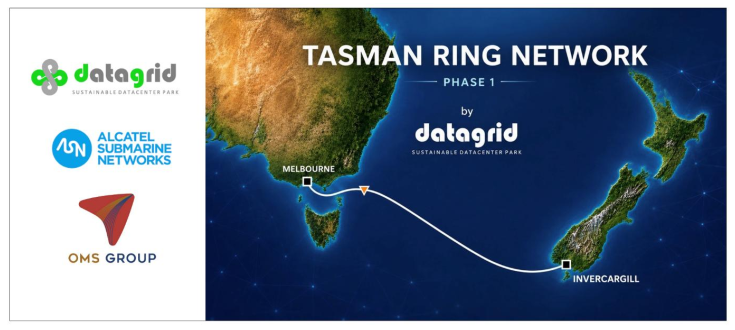
Tasman Ring Network Phase 1 - Invercargill to Melbourne
Spanning approximately 2,300 km, the Tasman Ring Network will be equipped with a minimum of eight fibre pairs, delivering a design capacity of at least 160 Tbps and opening a new digital route across the Tasman Sea.
A first for the South Island – true diversity for New Zealand
The Tasman Ring Network will be the first international submarine cable to land in the South Island. By opening a second, fully independent gateway in the south, the Tasman Ring Network will bring true geographic diversity to New Zealand’s international connectivity and significantly strengthen the resilience of the nation’s internet.
A game changer for Southland and the South Island
“We are delighted to sign this commercial agreement with ASN, the global leader in submarine cables, and with OMS, which operates the largest fleet of cable ships in the region,” said Remi Galasso, Chief Executive Officer of Datagrid. “The Tasman Ring Network will be a game changer for Southland and for the South Island as a whole. It will unlock the potential of the region, and will allow South Island IT companies, universities and research centres to benefit from better internet with latency improved by up to 45 percent compared with existing routes via the North Island. An entire digital ecosystem will be able to benefit from it and grow.”
“ASN is proud to contribute to the opening of a new digital route whose impact will undoubtedly be significant for the economic development of New Zealand,” said Alain Biston, Chief Executive Officer of Alcatel Submarine Networks. “We thank the Datagrid teams for their choice and assure them of our full collaboration in making this project a success.
A low-emission marine survey powered by autonomous offshore survey vessel
OMS will conduct the marine survey using the USV ELITE, it’s latest state-of-the-art long-range Unmanned Surface Vessel (USV). Operating without a conventional crewed survey ship, the USV will drastically reduce fuel consumption and the carbon footprint of the survey operations, while delivering high-precision seabed data along the entire route.
“We are honoured to have been selected by Datagrid, alongside ASN, to deliver the Tasman Ring Network,” said Ronnie Lim, Group Chief Executive Officer, OMS Group. “By deploying our stateof-the-art unmanned surface vessel for the marine survey, we will drastically reduce the carbon footprint of the survey operations demonstrating our commitment to building critical digital infrastructure in a more sustainable way. Our teams and our regional fleet look forward to carrying out the survey and the installation of the cable safely and on schedule.

Mercury acquires minority stake in Datagrid NZ to support long-term renewable demand growth
23 JULY 2026
Mercury NZ Limited (‘Mercury’) has invested US$30 million (NZ$53 million) for a 12.7% minority equity stake in Datagrid Holding Group NZ Ltd (‘Datagrid NZ’), strengthening its position alongside one of New Zealand's most advanced, large-scale, digital infrastructure projects and supporting long-term renewable electricity demand growth. The investment is funded from existing capital facilities and within capital management settings.
Datagrid NZ is developing what is expected to be New Zealand's most advanced large-scale data centre project at North Makarewa, Southland. The 360MW project holds resource consent and a final investment decision is expected to be made later this year. Mercury signed a 140MW power purchase option agreement with Datagrid in March 2026, providing a pathway for the project’s renewable electricity supply.
Mercury Chief Executive Stew Hamilton has also been appointed as a director of Datagrid NZ. He said it was a disciplined investment in a strategically important opportunity. “Investing in Datagrid NZ is aligned with our core strategy, bolsters our position alongside an important emerging source of long-term electricity demand, and is structured to preserve balance sheet strength and flexibility for our wider capital programme.
“We have a deep renewable development pipeline, and long-duration demand from large electricity users like Datagrid NZ provides us with the revenue certainty that underpins our investments in new renewable generation developments.”
Mercury Executive GM Wholesale Tim Thompson said the investment would improve Mercury’s understanding of how large-scale AI and data centre demand will develop in New Zealand. “It strengthens our position for future long-term offtake, and provides us with a closer link between future customer demand and renewable generation investment. It is a staged investment with appropriate governance and downside protection.”
Datagrid NZ founder and chair Rémi Galasso said speed of delivery was crucial. “Time to market is driving our strategy, and closing this round of investment funding allows us to move decisively. Partnering with a leading New Zealand green electricity generator like Mercury is a strategic step for us, not just an electricity supply arrangement.
“Thanks to this new partnership, Datagrid can continue developing its vision for the Southland project and begin horizontal construction works on the site.”
ENDS
Howard Thomas
General Counsel and Company Secretary
Mercury NZ Limited
https://www.mercury.co.nz/media/News%20Release%20-%20Datagrid%2023%20Jul%202026.pdf
Datagrid New Zealand and Mercury establish 140MW Power Purchase Option Agreement to drive AI infrastructure growth
Datagrid Press Release - Resource Consent
Auckland, New Zealand – 18 March 2026 – Datagrid New Zealand today announced the signing of a 140-megawatt (MW) long-term Power Purchase Option Agreement (PPOA) with Mercury, securing electricity price certainty for Datagrid’s next-generation AI data centre platform. The 15-year agreement represents one of the largest single commercial power arrangements dedicated to AI and high-performance computing infrastructure in New Zealand.
The 140MW, 1.2TWh p.a. PPOA will provide a long-term price hedge for Datagrid’s flagship hyperscale campus in Southland, supporting advanced artificial intelligence workloads, sovereign cloud services, and high-density computing operations. 1.2TWh p.a. is equivalent to 3% of national demand.
The partnership supports Datagrid’s commitment to enabling digital infrastructure growth while leveraging New Zealand’s predominantly renewable electricity generation portfolio. New Zealand already generates around 85% to 90% of its electricity from renewable sources and is on track to reach 98%+ renewable electricity by 2030. All electricity generation in the South Island is renewable, positioning Southland as one of the most attractive locations in the Asia-Pacific for AI infrastructure.
Rémi Galasso, CEO of Datagrid, said:
“This 140MW agreement with Mercury is a cornerstone for Datagrid New Zealand. It enables us to offer international AI players a competitive platform powered by renewable energy, natural cooling advantages, and long-term stability in Southland.
In a world of increasing global uncertainty, we see New Zealand evolving into a secure and trusted hub for AI infrastructure, combining sustainable energy, security, and strategic advantages for AI workloads. Datagrid intends to contribute to this vision through the development of New Zealand’s first AI Factory.”
Stew Hamilton, CEO of Mercury, added:
“It’s exciting to support New Zealand’s first AI Factory. Data centres represent a $70 billion economic growth opportunity for New Zealand, according to BCG’s recent Energy to Grow report, with benefits including jobs for locals during construction. This also positively positions Southland and, by extension, New Zealand in this fast-growing sector.
“Having guaranteed customers buying a significant amount of generation means we can continue to invest significantly in new renewable generation for New Zealand, helping meet future demand growth and build resilience.”
Mercury has just completed expansion of its Ngā Tamariki Geothermal Station near Taupō, while stage 2 of its Kaiwera Downs Wind Farm near Gore and Kaiwaikawe Wind Farm near Dargaville are both due to begin generating in 2026. Together the three developments represent $1 billion investment in new renewables. Mercury also has plans to invest $590 million in hydro refurbishment over the next decade.
Datagrid’s 280MW AI Factory project received resource consent approval in March, marking a major regulatory milestone for the development. Construction is expected to commence in June, with full project delivery targeted for 2028. During the construction phase, the initiative is expected to create over 1,200 skilled and technical jobs, delivering meaningful employment and economic benefit to the region.
The development also includes the construction of the Tasman Ring Network, the first international subsea cable to land directly in New Zealand’s South Island. This new digital gateway will significantly enhance international connectivity, resilience, and latency performance, reinforcing the country’s ambition to become a secure and globally connected hub for AI and advanced computing infrastructure.
ABOUT DATAGRID
Datagrid New Zealand is developing New Zealand's first AI factory - a 280MW hyperscale data center campus in Makarewa, Southland, purpose-built for advanced AI, sovereign cloud, and high-density computing workloads. Powered by renewable energy and benefiting from Southland's naturally cool climate, the campus is designed to achieve world-leading power usage efficiency. Datagrid is also developing the Tasman Ring Network, the first international subsea cable to land directly in New Zealand's South Island, connecting Invercargill with major Australian hubs and cutting trans-Tasman latency by up to 50%.
For more information, visit www.datagrid.nz.
ABOUT MERCURY NZ LIMITED
Mercury’s generation assets produce electricity from 100% renewable sources: hydro, geothermal and wind. We’re also a retailer of electricity, gas, broadband and mobile services. We’re listed on the New Zealand Stock Exchange and the Australian Stock Exchange with the ticker symbol ‘MCY’, with foreign exempt listed status. The New Zealand Government holds a legislated minimum 51% shareholding of Mercury.
Visit us at: www.mercury.co.nz.

Datagrid New Zealand receives resource consent to establish the nation’s first AI factory
Datagrid Press Release - Resource Consent
INVERCARGILL, New Zealand – 11 March 2026 – Datagrid New Zealand is pleased to announce that it has received full resource consent approval for its sustainable data center initiative, marking a significant milestone in the development of the New Zealand’s first AI factory. The approvals have been granted by Southland District Council, Environment Southland, and Invercargill City Council, paving the way for construction to commence.
In addition, the landing of the Tasman Ring Network at Oreti Beach has been fully approved, representing the first international subsea cable connection to New Zealand’s South Island. This infrastructure will enhance global connectivity and support the nation’s growing digital economy.
Datagrid New Zealand recognizes New Zealand’s political stability, abundant renewable energy resources, and strategic geographic position as key factors positioning the country to become a secure and trusted global data hub. The natural cooling conditions in Southland offer substantial energy-efficiency advantages, and Invercargill is poised to emerge as a vital digital destination in the coming years.
The approved project includes the construction of a 78,000 square metre state-of-the-art AI Factory in Makarewa, equipped with a dedicated Grid Exit Point substation. During the construction phase, the initiative is expected to create over 1,200 skilled and technical jobs, delivering meaningful employment and economic benefit to the region.
Once operational, the facility will consume 280 MW of power, making Datagrid New Zealand the country’s second-largest electricity user after the Tiwai Point aluminium smelter.
“We extend our sincere gratitude - ngā mihi nui - to the iwi, landowners, local councils, and the Southland community for their unwavering support throughout this process,” said Remi Galasso, Founder and CEO at Datagrid New Zealand. “This approval is the result of years of dedication and collaboration, and we are excited about the transformative impact this project will have on Southland and New Zealand as a whole.”
Datagrid New Zealand anticipates further announcements in the coming weeks as the project advances.
About Datagrid New Zealand
Datagrid New Zealand is building the country’s largest hyperscale computing project — a 280MW AI Factory campus in Southland designed to establish New Zealand as a global hub for sustainable AI and digital infrastructure.
Founded in 2021 by tech industry veterans Rémi Galasso and Malcolm Dick, Datagrid is developing a next-generation facility purpose-built for AI training, inference, and high-performance computing. The campus will host high-density GPU clusters serving global AI and cloud providers, powered by a dedicated 220 kV grid connection to Transpower’s transmission network. New Zealand’s cool southern climate and abundant renewable energy will underpin highly efficient, low-carbon operations supported by advanced cooling technologies.
Alongside the campus, Datagrid is delivering the Tasman Ring Network — a new submarine optical cable that will bring high-capacity international connectivity to New Zealand’s South Island for the first time.
Together, these projects form an integrated platform that leverages New Zealand’s natural and geographic advantages to attract world-class digital investment, drive regional economic growth, and position the country at the forefront of the global AI economy.
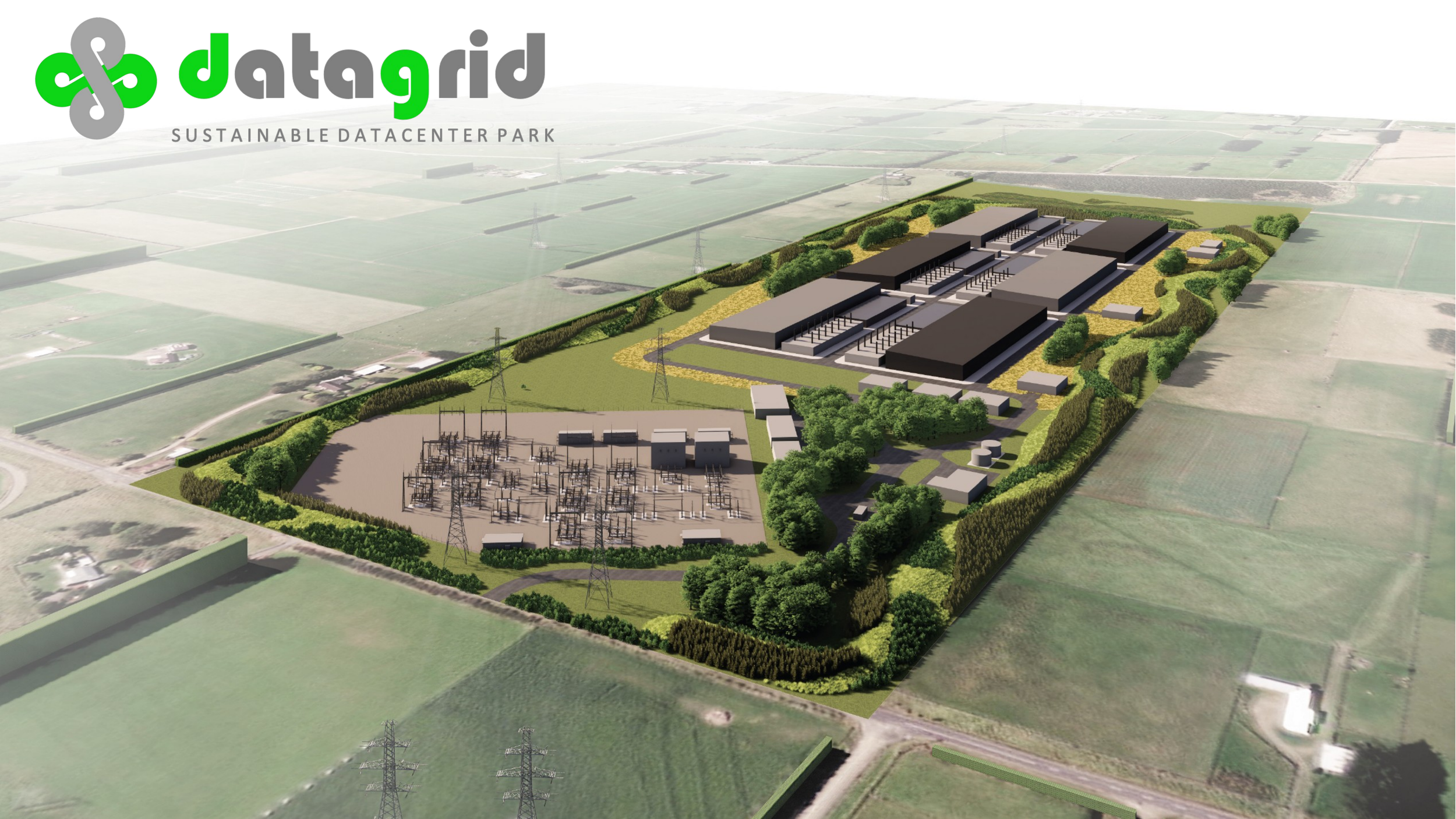
Datagrid Data Center Park
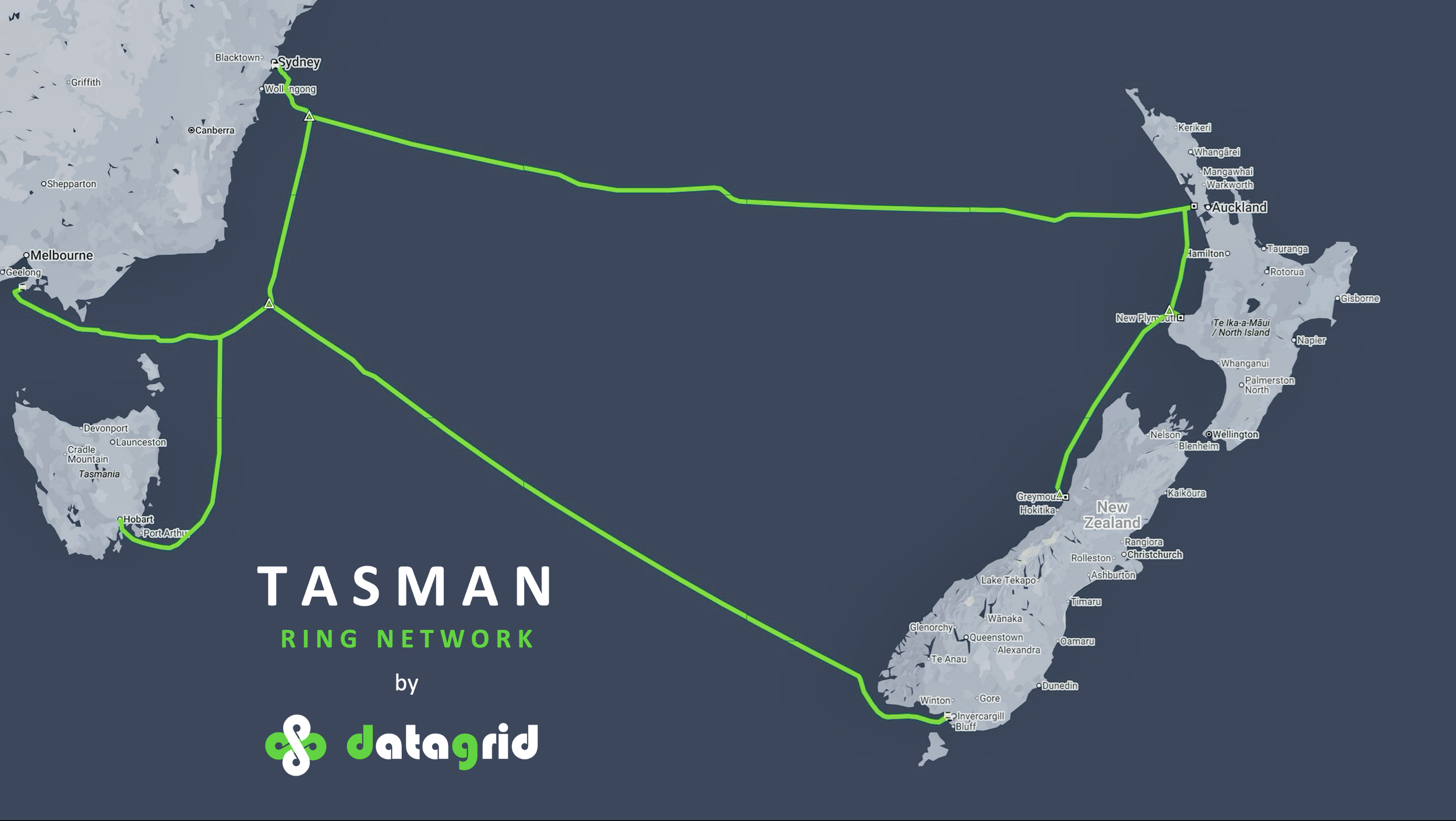
Datagrid Tasman Ring Network